
Relocating to Montreal: Bilingual Schools, Metro Access, and Top Family Districts
| Verified Population | 1,762,949 |
|---|---|
| GeoNames ID | 6077243 |
| Province & Country | Quebec, Canada |
| Timezone & Currency | America/Toronto (EST/EDT) | Canadian Dollar (CAD) |
| Rapid Transit Network | Société de transport de Montréal (STM) Metro with 4 lines and 68 stations, supplemented by the REM network |
The Montreal Family Landscape: Urban Appeal Meets Community Living
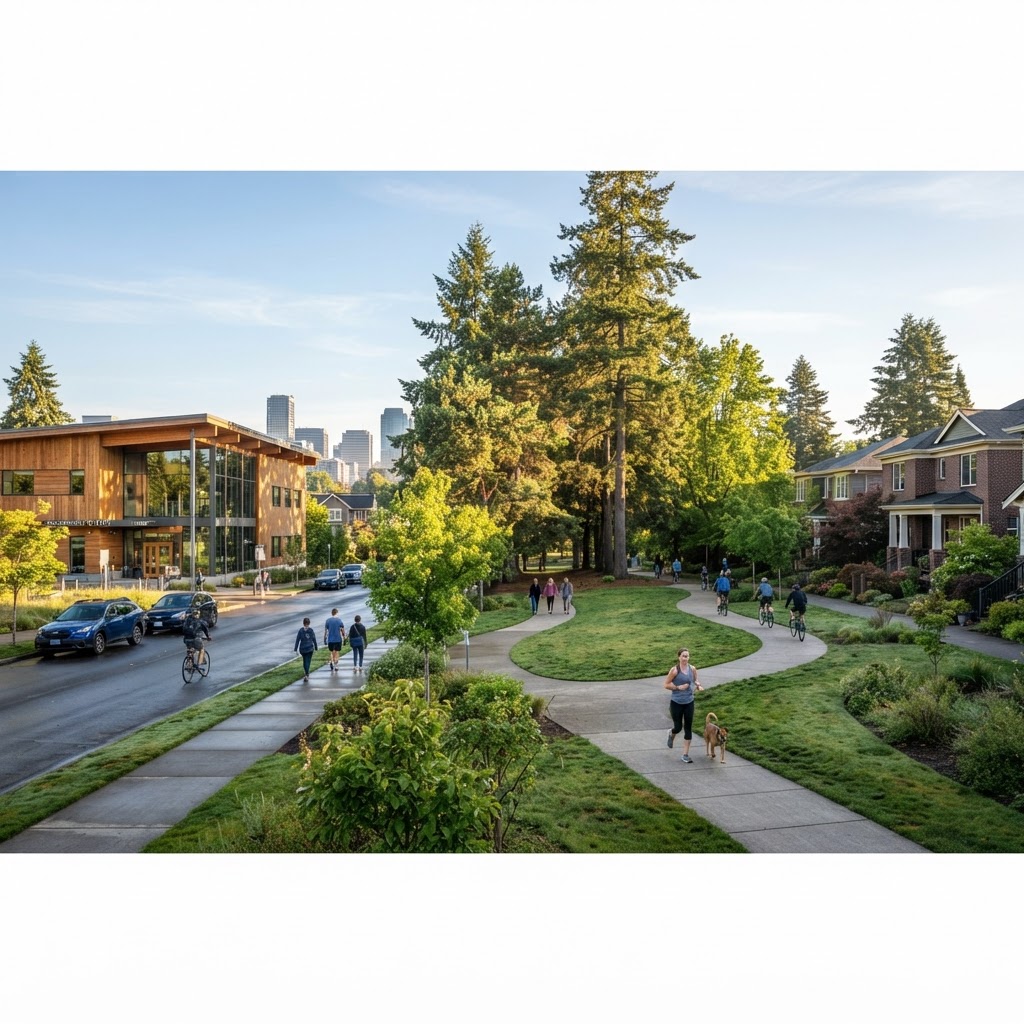
Relocating to Montreal represents an exciting shift toward a distinct North American metropolitan lifestyle steeped in French heritage and bilingual vitality. With an island population of 1,762,949, Montreal offers an enviable standard of living that combines pedestrian-oriented urban architecture, expansive park networks, and an active family-centric community culture. Unlike many major international hubs where urban centers cater predominantly to young professionals, Montreal maintains vibrant, multigenerational neighborhoods right across its core boroughs and inner suburbs.
Families planning a move must consider three fundamental pillars: neighborhood connectivity to transit, accessibility of educational facilities, and daily neighborhood livability. Montreal's residential boroughs boast diverse streetscapes, from historic stone plexes in Rosemont to stately detached residences in Town of Mont-Royal and leafy avenues in Notre-Dame-de-Grâce (NDG). Understanding how these enclaves integrate daily commerce, outdoor recreation, and public transport will help you anchor your household in the neighborhood that best reflects your routines.
- Determine lifestyle preference: walkable inner-city urban plex versus suburban single-family home with a private yard
- Budget for Quebec municipal and school taxes alongside routine residential purchase or rental expenses
- Evaluate proximity to essential services such as local CLSCs (community healthcare clinics), pharmacies, and grocery hubs
- Consider seasonal storage solutions for winter sports equipment, bicycles, and seasonal vehicle tires
Top Family Neighborhoods: From Westmount and NDG to Rosemont and Town of Mont-Royal
Montreal's boroughs each present a distinct rhythm and community profile, as detailed across municipal analyses and local living reports published by [Ville de Montréal](https://montreal.ca/en/articles/living-montreal-means-having-access-to-everything-7139) and [Groupe Mackay](https://groupemackay.com/en/blog/meilleurs-quartiers-familles-montreal). Notre-Dame-de-Grâce (NDG), situated in the Côte-des-Neiges–Notre-Dame-de-Grâce borough, remains an enduring favorite for English-speaking and bilingual families. NDG's tree-lined residential corridors, brick duplexes, and bustling community hubs around Monkland Village and Sherbrooke Street provide walkable access to grocers, independent cafés, and recreational open spaces like NDG Park and Loyola Park.
For households seeking French immersion, cultural density, and urban vitality, Rosemont–La Petite-Patrie is an outstanding choice. As highlighted in [Moving2Canada's Living in Montreal Guide](https://moving2canada.com/planning/destination-guides/montreal/living-in-montreal), Rosemont offers a rich neighborhood experience anchored by Parc Maisonneuve, Beaubien Street's local bakeries, and close proximity to the Jean-Talon Market. In parallel, Outremont and Town of Mont-Royal (TMR) deliver prestigious, quiet residential enclaves characterized by architectural distinction, spacious parklands like Parc Saint-Viateur, and quick transit access to downtown corporate offices.
Families looking for suburban space, water access, and low-density quiet often look toward the West Island (such as Pointe-Claire and Beaconsfield) or Lachine, highlighted by real estate analyses from [Elite Real Estate Group](https://eliterealestategroup.com/best-neighborhoods-montreal-families/) for its historic waterfront canal, sprawling lakeside promenades, and expanded commuter train and light rail connections.
- Explore NDG for diverse bilingual culture, mature canopy streets, and community centers
- Target Rosemont–La Petite-Patrie for active cycling infrastructure, classic plex living, and artisan markets
- Consider Outremont or Town of Mont-Royal (TMR) for premier academic environments, stately lots, and quiet boulevards
- Tour Lachine and West Island waterfront communities if expansive yard space and nautical recreation rank high
Education and Language Framework: Public Boards, Private Institutions, and Bill 101
A critical consideration for international and interprovincial families moving to Quebec is navigating the provincial language framework under the Charter of the French Language (Bill 101). In Quebec, public primary and secondary education is divided into French-language and English-language school service centres. By default, children residing in Quebec must attend French-language public schools (such as those operated by the Centre de services scolaire de Montréal – CSSDM), unless one of the parents completed the majority of their elementary education in English within Canada, qualifying the child for an English Eligibility Certificate under provincial law.
For families who do not qualify for English public school instruction, Montreal provides an impressive spectrum of options. High-caliber French public schools and international baccalaureate programs, such as École internationale de Montréal in Westmount, provide globally competitive curricula, as cataloged by [ARIANNE Relocation's Montreal Schools Guide](https://www.ariannerelocation.com/international-schools-in-montreal/). Alternatively, families frequently explore private institutions. Private schools operating without provincial subsidies, including independent academies like College Prep International, are exempt from Bill 101 certificate restrictions. Furthermore, institutions like Collège Stanislas in Outremont deliver accredited French Baccalaureate programs under the AEFE network, easing academic continuity for European expatriate families.
- Assess whether your children qualify for the Quebec Certificate of Eligibility for English public schooling
- Prepare authenticated transcripts, immunization records, and certified translations for school registration boards
- Review enrollment deadlines for French private institutions (Collège Stanislas, Collège Regina Assumpta) well in advance
- Explore bilingual extracurricular and community athletics at local YMCAs and borough recreation centers
Navigating Public Transit: STM Metro, Bus Networks, and Regional Rail
Daily commuting in Montreal is among the most reliable in North America, anchored by the Société de transport de Montréal (STM). The subterranean Montreal Metro comprises 68 stations distributed across four color-coded lines (Green, Orange, Blue, and Yellow), operating on clean rubber-tired rolling stock. As outlined in [Moving2Canada's Transportation Overview](https://moving2canada.com/planning/destination-guides/montreal/living-in-montreal), the system connects residential boroughs seamlessly to downtown business hubs, McGill University, Université de Montréal, and major healthcare campuses.
Complementing the underground rail is an extensive urban bus system, including express commuter routes and dedicated bus lanes on major arteries like Boulevard Pie-IX and Sherbrooke Street. For suburban and outer-borough commuters, the network is augmented by Exo commuter trains and the modern Réseau express métropolitain (REM) automated light rail system. A centralized OPUS transit smart card allows parents and students to transfer effortlessly between transit modes across the Greater Montreal area, substantially reducing the logistical necessity of owning multiple family vehicles.
- Procure transit OPUS smart cards for each family member, registering youth cards for student fare reductions
- Verify your target neighborhood's walking radius to the nearest Metro station or express bus stop
- Map regional transit connections via the REM and Exo trains for West Island or South Shore day trips
- Download the Chrono transit app to monitor real-time bus arrivals and network route updates
Frequently Asked Questions
Can my child attend an English public school if we relocate from abroad?
Under Quebec's Charter of the French Language (Bill 101), children of newcomers are generally required to attend French-language public schools or government-subsidized private schools. To attend an English public school, a child must obtain an Eligibility Certificate, which typically requires that at least one parent completed the majority of their elementary education in English in Canada. Exceptions exist for children of temporary foreign workers on specific temporary permits, or families who enroll in non-subsidized private schools.
Which Montreal neighborhood is best for balancing downtown access with green space?
Notre-Dame-de-Grâce (NDG) and Rosemont–La Petite-Patrie offer prime balances. NDG provides quick access to downtown via the Orange Line Metro (Villa-Maria, Vendôme) alongside leafy community spaces like NDG Park and Loyola Park. Rosemont offers the expansive Parc Maisonneuve, community green spaces, and direct connectivity via the Orange and Blue Metro lines.
Is owning a car mandatory for families living in Montreal?
In central and inner-ring boroughs such as the Plateau, Outremont, Rosemont, and NDG, owning a car is entirely optional due to frequent STM bus service, dense Metro coverage, dedicated bike paths, and car-sharing fleets like Communauto. However, families residing in outer suburbs or parts of the West Island frequently find having at least one vehicle convenient for weekend sports, shopping, and regional travel.
How do public daycare waiting lists work in Montreal?
Subsidized public daycare centres in Quebec (Centres de la petite enfance, or CPEs) are centrally managed through the provincial 'La Place 0-5' registration portal. Waiting lists can be extensive, so relocating parents are strongly advised to create an account and register their children across multiple local facilities as early as possible.
Explore More in Montreal
Continue your research on the Montreal City Hub, explore Quebec, or browse all Canada cities.
Official Sources & References
- Ville de Montréal – Living in Montréal Borough Insights
- Moving2Canada – Living in Montreal: A Newcomers Guide
- Groupe Mackay – Best Family Neighbourhoods Montreal
- ARIANNE Relocation – International Schools in Montréal Guide
Featured photograph credit: Photo: Diliff / Wikimedia Commons (CC BY-SA 3.0)